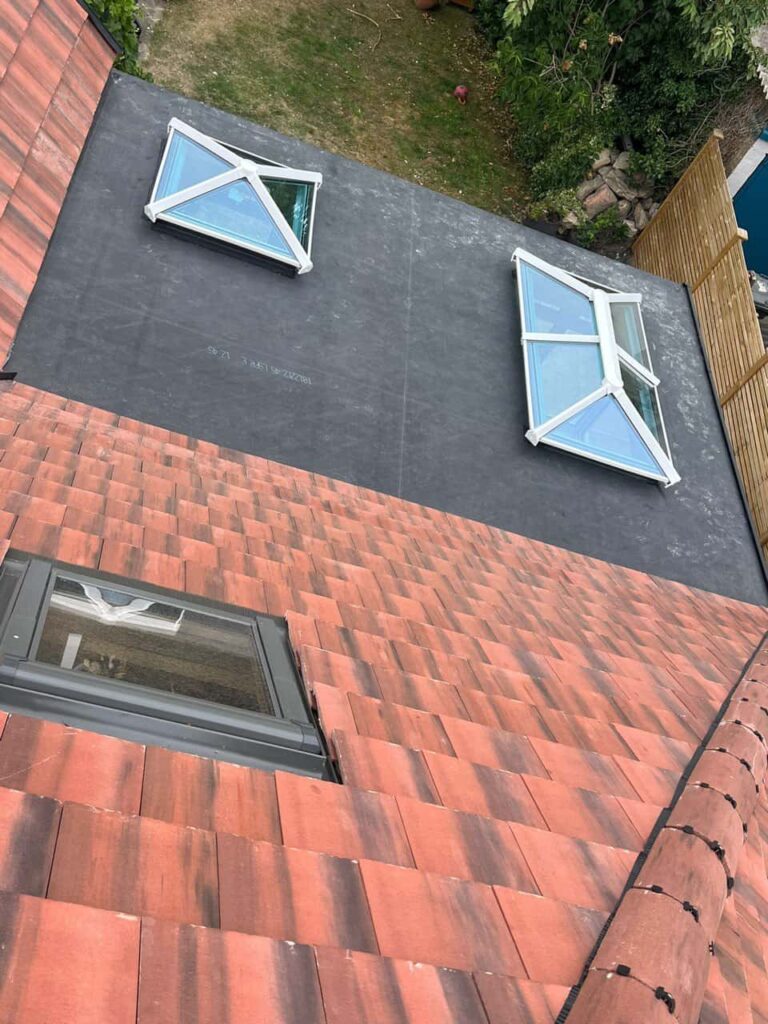
When a roof is suddenly damaged, the first priority is to prevent the situation from worsening. Missing tiles, damaged flashing, split roofing materials or an exposed section of underlay can allow rain and wind to affect areas that were previously protected.
A complete permanent repair may not always be possible during the initial visit. Poor weather, limited visibility or the need for replacement materials can influence what work can be completed immediately. Making the affected area weather-secure provides essential short-term protection while the damage is properly assessed and the lasting repair is planned.
For property owners in Criklade, Wiltshire, understanding this process helps explain why emergency roofing work often begins with stabilisation rather than immediate reconstruction.
How Weather-Securing Protects a Damaged Roof
It Reduces Further Water Ingress
Once the outer roof covering has been compromised, even a relatively small opening can admit a considerable amount of water during persistent rainfall. Moisture may then travel beneath tiles, across underlay or along structural timbers before becoming visible indoors.
Weather-securing aims to cover or seal the vulnerable area so that additional water is less likely to enter. This helps limit the spread of damp while the underlying problem is investigated.
It Protects Exposed Roofing Components
Tiles, slates and other surface materials form the roof’s first protective layer. If they are removed or displaced, the underlay, battens and timber structure beneath may become directly exposed to the weather.
These components are not intended to withstand prolonged exposure. Temporary protection helps preserve their condition and can prevent an isolated defect from developing into a larger area of deterioration.
It Helps Stabilise Loose Materials
Emergency damage can leave tiles, flashing or sections of roofing material loose and vulnerable to further movement. Strong winds may lift already weakened components or disturb neighbouring areas that initially appeared sound.
A roofer may need to secure loose materials, remove unstable debris or protect exposed sections before carrying out a more detailed repair. This stabilisation reduces the chance of the affected area becoming larger before permanent work can begin.
It Creates Time for an Accurate Assessment
The most visible damage is not always the full extent of the problem. Water can enter through one point and travel before appearing inside the property. Wind can also disturb fixings, battens and adjacent tiles without producing immediately obvious external damage.
Once the area has been protected, the roofer can assess:
- The original point of failure
- The condition of nearby tiles or slates
- The integrity of the underlay and battens
- Whether flashing or roof junctions are affected
- How far moisture has travelled
- Whether the damage is isolated or widespread
This prevents a rushed surface repair from concealing defects that still require attention.
It Allows the Permanent Repair to Be Planned Correctly
Emergency repairs and permanent repairs have different purposes. Weather-securing controls the immediate risk, while the final repair restores the roof’s intended performance and appearance.
The initial visit may reveal that matching tiles, new flashing or replacement supporting materials are required. Protecting the roof first allows the correct materials and repair method to be prepared instead of relying on an unsuitable quick fix.
Temporary Protection Is Not the Final Solution
A weather-secure covering or temporary seal is designed to reduce immediate exposure. It should not be mistaken for a complete repair, particularly where materials beneath the surface have been damaged.
Leaving temporary work in place for too long can allow hidden defects to remain unresolved. A follow-up inspection and permanent repair are important for restoring the complete roofing system.
Different Roofs Require Different Emergency Measures
The correct method depends on the roof’s construction and the type of damage. A missing tile on a pitched roof requires a different response from a split membrane on a flat roof or damaged leadwork around a chimney.
The roofer must consider the roof pitch, materials, water-flow direction and surrounding junctions. Weather protection should be fitted in a way that directs water away from the vulnerable area without causing it to collect elsewhere.
Internal Signs Can Help Identify the Affected Area
Ceiling stains, damp insulation and visible drips provide useful information, although they do not always show the exact point of entry. The position and timing of internal moisture can help a roofer trace the likely route of the water.
Property owners can assist by noting:
- When the leak began
- Which weather conditions made it worse
- Where water first became visible
- Whether the affected area is expanding
- Whether any unusual roof movement or noise occurred
This information can support the external inspection and help determine where emergency protection is most urgently needed.
Prompt Action Can Limit Secondary Damage
Roof damage rarely remains confined to the outer covering if water continues to enter. Moisture can affect insulation, ceilings, wall finishes, battens and accessible timbers.
Making the roof weather-secure cannot reverse damage that has already occurred, but it can reduce continued exposure. Acting promptly gives the permanent repair a better chance of remaining focused on the original defect.
Why Professional Emergency Repairs Matter
Emergency roofing work requires more than covering the most visible gap. The protective measure must be appropriate for the roof, securely positioned and integrated with the way water moves across the surface.
A professional roofer can stabilise the affected area, identify immediate vulnerabilities and explain what further work is required. This provides a structured route from short-term protection to a complete repair.
Conclusion
Emergency roof repairs begin with making the affected area weather-secure because stopping further exposure is the immediate priority. Temporary protection can reduce water ingress, stabilise loose materials and protect the layers beneath the roof covering.
Once the situation is controlled, the damage can be properly assessed and a permanent repair planned using suitable materials and methods. If your roof in Criklade, Wiltshire, has suffered sudden damage, contact LJ Roofing Criklade for a professional assessment and appropriate emergency assistance.
Call us on: 01793 569 197
Click here to find out more about LJ Roofing Criklade
Click here to complete our contact form and see how we can help with your roofing needs.